
Nature watched close
On seeing birds through New Zealand's sanctuaries, via William Herbert Guthrie-Smith

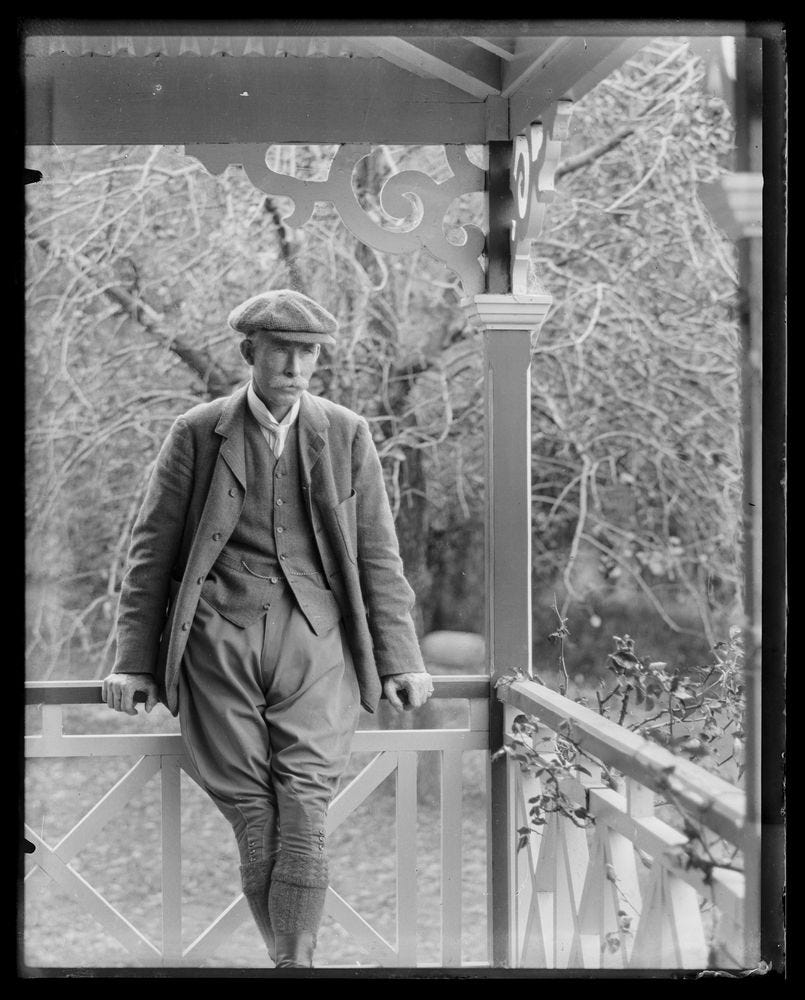
In 1925, William Herbert Guthrie Smith published Bird Life on Island and Shore, an account of some of the birds that he saw on his travels across different parts of New Zealand. Originally from Helensburgh, Guthrie Smith moved to New Zealand in 1880 when he was 18 years old (meaning, in part, his observations are scattered with such excellent Scots words as “kenspeckle”). Bird Life on Island and Shore is not his most well-known book - in fact it is out of print, and I only own it because two of my friends tracked me down an antique copy.
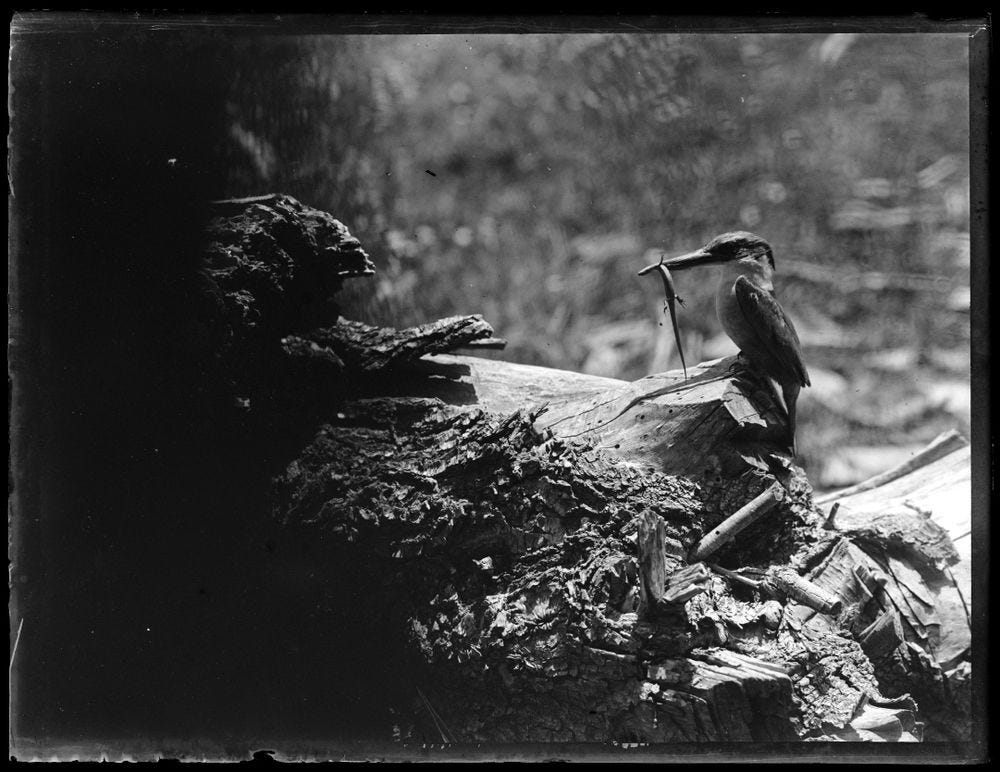
It is also a fairly simple text - though one I found fascinating. Each chapter follows a different New Zealand bird, with Guthrie Smith providing detail on the birds habits and habitats, as well as how he found each of their birds and their nests. Included are his photographs, as well as accounts of how (occasionally) he earned their trust enough to touch them or, in the case of his chapter on the tieke1, how he picked up the nest with a female bird who was, at the time, incubating her eggs.
In the opening of the book, Guthrie Smith essentially tells the reader they should probably read the book as fast as they can because:
‘If half a loaf of bread is better not only than no bread at all, it is also better than overmuch bread. Readers become surfeited with topics not of everyday interest; books such as Bird Life on Island and Shore should be swallowed at a single gulp.’
Despite this, Bird Life on Island and Shore is, to me, a crucial text in terms of New Zealand’s birds, and the progress that has been made.
Out of the fourteen or so birds that Guthrie Smith dedicates a chapter to, I saw seven whilst travelling through New Zealand (the tarāpuka, the tara, the poaka, the hihi, the toutouwai, the pōpokotea and the tieke) though it’s worth noting that many other birds appear in Guthrie Smith’s accounts. He makes occasional references to korimako and tūī which I saw frequently - especially the latter, which I saw every day of my visit (much to my delight, as they were one of my favourite birds due to their general cheekiness, beautiful little ruffs and excellent bird call).
It’s important to note that New Zealand only has two native land mammals, both of which are bats. The main predator for birds would have been a huge eagle with a wingspan of up to 3 metres - as such, birds in New Zealand would have been safer on the ground rather than flying, and many of them have evolved to be ground nesters and/or flightless, as well as freezing (to blend in) rather than flying away when faced with danger. This has made them easy targets for the rats, possums, stoats, weasels and dogs that humans brought to New Zealand, who can eat eggs straight from their nests on the ground, or even attack them (especially in the case of flightless kiwi birds).
For Guthrie Smith to see the wide range of birds that he did, he often took boats out to these smaller islands - which were less likely to have, or have as many, rats and other pests. He spent long amounts of time watching and waiting behind screens that he built out of plants. He would put the screen in place, wait a while, then move it forward until it was close enough to the bird to take a photograph. In the first chapter, he recounts being attacked by a tarāpuka who did not fall for his screen at all:
‘In order to gain sight of him, it was necessary to peep round the screen. This - after a proper interval of prayer and supplication - I attempted, moving as gently and gradually as a lizard can move its head. Alas! it was ordained that one eye of his should meet with one of mine […] Then in one long roar his feelings were vented. He had foreseen his triumph, and, waiting for the psychological moment, had been storing up suitable imprecations for the persons who haunt lonely beaches and spy on the privacies of incubation.’
I have been birdwatching now for a few years. It’s something I started during COVID-19 lockdown when I had a lot more time to spend in the area I lived in, and often went to the parks near my flat. I read an article by Stuart Kenny about the importance of local nature which mentioned bird call apps, and I decided to download one on a whim.
Birdwatching naturally appeals to some part of my brain that likes to collect things. I love keeping a list of the birds I have seen - each new spot feels like something akin to discovering a cleverly hidden unlockable item in a video game, or spotting a detail in a painting. For a long time, I have thought of seeing birds in the language of “luck”. If you saw lots of new birds, you had been lucky. If you saw a bird you really wanted to see, you had had good luck. More recently, I have realised this framing is flawed.
In 2006, there were 89 tūī birds in the central suburbs of Wellington, New Zealand’s capital. Today, there are so many it would be difficult to count them all. This is not “luck”, this is due to the hard work of conservationists. Wellington is home to Zealandia Te Māra a Tāne, a 225 hectare sanctuary surrounded by a high fence that has been designed to keep out predator animals. The focus is to try and make this patch of land as close to what New Zealand was like before human inhabitants as possible. This will not happen overnight, in fact, they make reference to having a plan that will take over five hundred years.
At the sanctuary, you can see some of the birds that Guthrie Smith saw on his travels - in my case, the hihi, the toutouwai, the pōpokotea and the tieke, but also many more. I saw a pīpīwharauroa, a cuckoo which migrates from Papua New Guinea, being fed by a tiny riroriro, a warbler with a distinctive lilting call. I saw a colony of different kinds of kawau, which were not introduced to the sanctuary, but elected to live there due to the population of ducks and native fish they can eat. I got incredibly close to a kākā, one of New Zealand’s three types of parrot. When the sanctuary reintroduced them to Wellington in the early 2000s, there was around 30. Now the numbers are as high as over 1,000.
Another sanctuary I visited was Tiritiri Matangi, an island roughly an hour away from Auckland by boat. In the 1800s, Tiriti was farmland, but its lease was withdrawn in 1971 in order to let the land restore. Two scientists from the University of Auckland, John Craig (a zoologist) and Neil Mitchell (a botanist) argued that instead of letting the land regenerate by itself over a long time, there should be a more active approach. This lead to the “spade brigade”: boatloads of volunteers, many of whom were school children, who replanted over 280,000 native trees. Since then, nearly thirty types of bird have been identified as living on or visiting the island and Tiritiri Matangi is recognised as one of the most successful community conservation projects in the world.
Walking through dense canopies of trees that, at times, shut out most of the sunlight, I saw (for only a few seconds) a North Island kōkako - an incredibly rare bird and listened to its slightly haunting organ-like calls. A tiny tītitipounamu hopped close enough for us to take its picture, and on several occasions a korimako flew right up to us. After walking up the hill towards Tiritiri’s lighthouse, we had our picnic lunch (no food is sold on the island) listening to birdsong that Joseph Smith, a naturalist who travelled to Tiritiri with Captain Cook, described as: ‘the most melodious wild music I have ever heard’. On coming down a shortcut to get back to the harbour, several tūī lay on the path, sunning themselves whilst kererū flew suddenly up into the sky before letting their bodies drop in a mating display. The volunteer guides, who had finished their guided tours or shifts in the shop, rushed to the sea to get a swim in before the boat took us back to Auckland.
In so many regards, I am lucky. Lucky that I can visit New Zealand in the first place. Lucky that I can see so many birds, knowing how much work and dedication it took someone like William Herbert Guthrie Smith to see just a few of the ones I encountered so often on my trip.
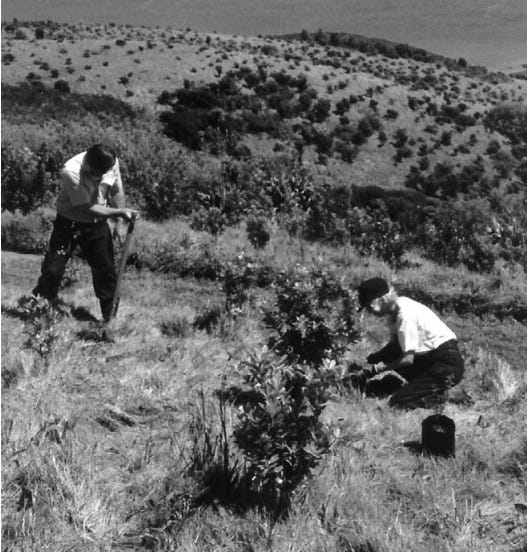
But seeing a bird, any bird, is not quite “luck”. “Luck” suggests there is something outwith our power that creates the right conditions for a bird to be in front of us. In reality, this is something that we can change. We can dedicate huge chunks of land to sanctuaries, where we consciously work to undo the harm we have caused. We can replant native trees that create a safe place for these birds to live. On a bigger scale, we can fight back against climate change - both through reducing our own consumption, and demanding that large organisations, or our own governments, make huge changes.
In the opening to Bird Life on Island and Shore, Guthrie Smith states that: ‘nature watched close is nature cared for’. Our personal relationship with the land we live on, whether birdwatching, photography, gardening, replanting, rewilding, walking, or noticing, can have crucial importance. Or, as Guthrie Smith says:
‘all labour such as gardening, bee-keeping, fruit-growing, agriculture - work dealing at first-hand with the soil, - it calls forth the faculty of observation’
I keep a track of the birds I see every day, and take part in bird counts, such as the Big Garden Birdwatch, in part because I think it is important to create a record of what, and how many, birds I see. I hope this information can be used to support the birds whose numbers are dropping. I also think that doing so makes me care about these birds, and the plants and land they rely upon, and leads me to further ecological action.
To me, it is not enough to birdwatch for my own relaxation or enjoyment. Whilst I do love birdwatching for how it makes me feel, to end there - with no further advocating for the natural spaces around me - would be to only take from what I see, and not working to ensure it can continue to exist. As Guthrie Smith says:
‘Why should we paint life drab for the unfortunates yet to come? […] I don’t say we have shall quite come to that, but certain it is that with every species eliminated, by so much is the world robbed of light and colour […] Heaven help us poor mortals if an abominable utilitarianism is to chill the world like an eclipse, if what we call civilisation is to mean only the survival of man’
Near where I live is a very small patch of woods, planted by volunteers like those who replanted Tiritiri Matangi. I visit it often - in part to enjoy the experience of being surrounded by trees, in part to note down what birds are there during different months of the year. Since coming back from New Zealand, I like to think of it in the same way the workers at Zealandia Te Māra a Tāne think of the land they work on: as a several hundred year commitment. I hope the people who come long after me enjoy my local woods. I hope to that the birds I so enjoy still live there amongst their trees and plants. “Hope”, however, is not a passive verb. It is something that I, that everyone who takes a walk through those woods, can keep fighting to ensure it does come true.
It should be noted that Guthrie Smith does not use the Māori terms for birds or plants, but I have decided to do so throughout this piece.